Hypertension/High Blood Pressure
Blood pressure is the force of blood against your artery walls. If it is too high, it can increase your risk of heart disease, stroke, kidney disease and other health problems.
High blood pressure often has no symptoms, so checking your blood pressure is the only way to know if it is raised.
|
Blood Pressure Reading |
What It Means |
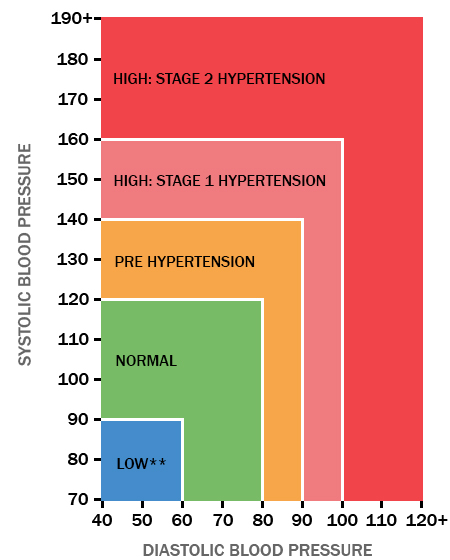
| Below 90/60 | Low blood pressure |
| Around 120/80 | Ideal blood pressure |
| 140/90 or above | High blood pressure |
| 180/120 or above | Very high – seek urgent medical advice |
Home blood pressure readings are usually slightly lower than readings taken in the surgery.
Blood Pressure Chart
- High blood pressure (hypertension) can put a strain on your arteries and organs, which can increase your risk of developing serious problems such as heart attacks and strokes.
- Low blood pressure (hypotension) isn’t usually as serious, although it can cause dizziness and fainting in some people.
A blood pressure test is the only way to find out if your blood pressure is too high or too low, because most people won’t have any obvious symptoms. Having a test is easy and could save your life.
You can ask for a blood pressure test if you are worried about your blood pressure at any point.
You can get your blood pressure tested at a number of places, including:
- at your local GP surgery
- at your local pharmacy
- in some workplaces
- at home (see home blood pressure testing below)
- at an NHS Health check appointment offered to adults in England age 40 - 74
It is recommended that all adults over 40 years of age have their blood pressure tested at least every five years so any potential problems can be detected early.
If you have already been diagnosed with high or low blood pressure, or you are at a particularly high risk of these problems, you may need to have more frequent tests to monitor your blood pressure.
How blood pressure is tested
Blood pressure is measured using a device called a blood pressure monitor. This usually involves an inflatable cuff placed around your upper arm. Many blood pressure monitors are now digital and provide an automatic reading.
To help ensure an accurate result:
- Sit comfortably with your back supported and feet flat on the floor.
- Avoid crossing your legs.
- Rest for 5 minutes before the test.
- Avoid talking during the measurement.
- Support your arm so it is at the same level as your heart.
During the test, the cuff will inflate around your upper arm. You may feel a brief squeezing sensation, but this only lasts a few seconds. As the cuff slowly deflates, the monitor measures the pressure of blood flowing through your arteries.
Your blood pressure reading is recorded as two numbers, for example 120/80 mmHg:
- Systolic pressure (top number) – the pressure when your heart pumps blood around your body.
- Diastolic pressure (bottom number) – the pressure when your heart relaxes between beats.
Your result is usually available immediately, either from the healthcare professional carrying out the test or on the monitor's display.
Home blood pressure monitoring
-
Home readings can give a more accurate picture of your usual blood pressure.
For home monitoring:
- sit quietly for 5 minutes before taking a reading
- keep your back supported and feet flat on the floor
- use the correct cuff size on your upper arm
- take 2 readings, 1 minute apart
- record readings morning and evening for 7 days
- ignore the first day and average days 2 to 7
-
Please submit your home blood pressure readings using the online form if the practice has asked you to do this.
- In some cases, your doctor may recommend 24-hour or ambulatory blood pressure monitoring (ABPM).
- This is where your blood pressure is tested automatically around every 30 minutes over a 24-hour period using a cuff attached to a portable device worn on your waist.
- ABPM can help to give a clear picture of how your blood pressure changes over the course of a day.
You should continue with your normal daily activities during the test, although you must avoid getting the equipment wet.
Blood pressure is written as 2 numbers, for example 140/90.
- the top number is the pressure when your heart pumps
- the bottom number is the pressure when your heart relaxes between beats
As a general guide:
- below 90/60 may be low
- around 90/60 to 120/80 is usually normal
- 140/90 or above may be high
- home readings of 135/85 or above may suggest high blood pressure
Things that can help keep your blood pressure under control include:
- eating a balanced diet
- reducing salt
- maintaining a healthy weight
- regular physical activity
- cutting down on alcohol
- stopping smoking
- taking medication as prescribed
- attending blood pressure reviews when invited
Contact the practice if:
- your readings are consistently high
- your readings are very low and you feel dizzy or faint
- you have started new blood pressure medication and are getting side effects
- you are pregnant and have raised blood pressure
- you need advice about your blood pressure medication or monitoring
Call 999 if you have symptoms such as chest pain, severe shortness of breath, weakness on one side of the body, difficulty speaking, confusion, or sudden severe headache.
Find trusted NHS advice and support to help you understand, monitor and manage your blood pressure.
NHS high blood pressure advice
Information about symptoms, diagnosis, treatment and lifestyle changes.
Visit NHS high blood pressure advice
NHS low blood pressure advice
Information about low blood pressure, symptoms and when to get help.
Visit NHS low blood pressure advice
Blood Pressure UK
Charity information about home monitoring, healthy lifestyle changes and understanding your readings.
British Heart Foundation
Information booklet about understanding high blood pressure.
Visit British Heart Foundation
Validated blood pressure monitors
Check whether a home blood pressure monitor has been clinically validated.